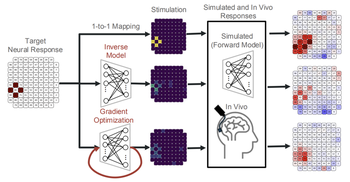
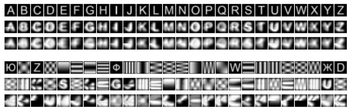
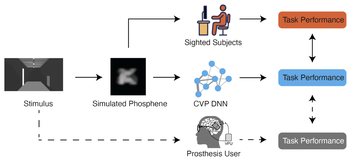
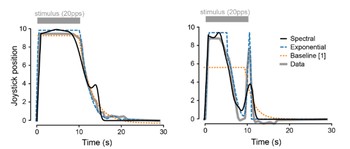
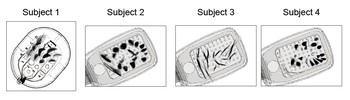
Artificial vision depends on where in the visual system we intervene. Stimulation of the retina, LGN, and visual cortex can all produce visual percepts, but each target comes with different anatomy, circuitry, and constraints. We study those differences and build models that connect stimulation to neural responses and perception.
What We Study
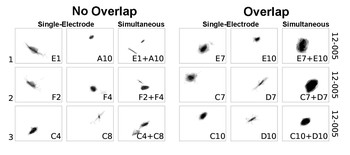
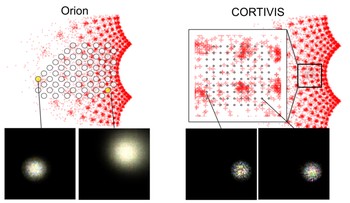
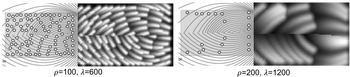
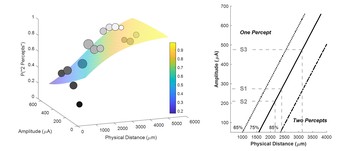
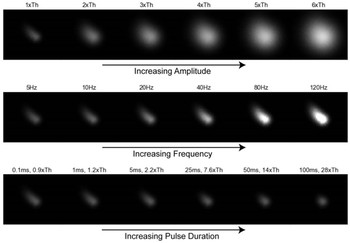
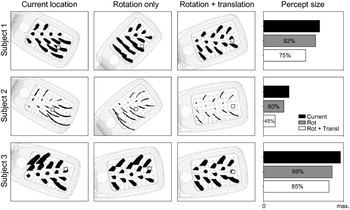
We combine computational modeling with psychophysics and neurostimulation. In the retina and LGN, we use known anatomy and physiology to predict the percepts produced by electrical stimulation. In cortex, we study phosphene perception and ask which stimulation-evoked responses propagate through the visual system. Across these systems, we are interested in which biological details actually matter for predicting what someone will see.
Current Directions
- Retina. Models of how retinal circuitry, electrode geometry, and stimulation parameters affect the spatial, temporal, and chromatic properties of artificial vision.
- LGN. Models of phosphene perception that account for the organization of visual representations in the thalamus.
- Cortex. Psychophysics and neurostimulation experiments on phosphene perception, individual variability, and the spread of stimulation-evoked activity.
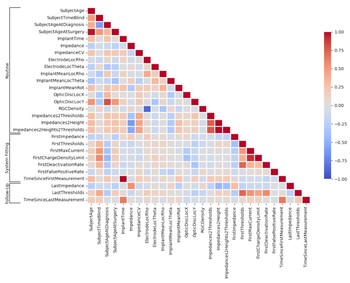
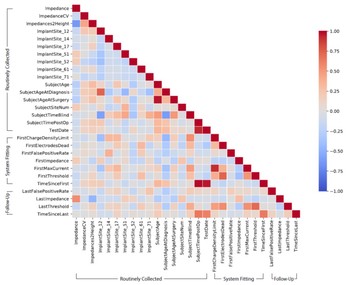
- Computational models. Predictive models connecting stimulation, anatomy, neural activity, and perception.
- Psychophysics. Quantitative test batteries for characterizing artificial visual percepts across participants and stimulation methods.