Join Us

We welcome enthusiastic, computationally minded people interested in understanding vision and advancing sight restoration for people living with blindness. We especially value people who know what they want to learn, take initiative, and follow projects through to completion.

Before reaching out, please check our Lab Manual.

PhD Position: Machine Learning for Visual Neuroprostheses (Fall 2027)

We are recruiting one PhD student through the UCSB Department of Computer Science to join the lab in Fall ‘27. Applications are due December 16, 2026.

The project focuses on computational models and machine-learning methods for visual neuroprostheses. This includes models that predict safe neural activity, visual percepts, and where to place electrodes, as well as inverse/control methods for producing desired percepts.

We are looking for someone who is genuinely interested in the neuroengineering problem: how electrical stimulation produces neural activity and perception, and how we can model and control those relationships to create useful vision. You should have strong ML/programming foundations (beyond vibe coding) and want to work closely with real neurotechnology and implant teams.

Prior neuroscience or neuroengineering experience is useful, but not required. What matters more is that you are excited by neural interfaces, visual perception, and sight restoration, rather than treating this as another ML dataset.

Potential PhD Position: Low Vision & Computational Psychophysics (Fall 2027)

We may also recruit one PhD student through either the Departments of Computer Science or Psychological & Brain Sciences for Fall ‘27, contingent on funding and departmental approval. Applications are due December 1, 2026.

The project would focus on understanding how vision loss changes visual behavior and using quantitative models and experiments to predict how people adapt to impaired or restored vision. Possible directions include central and peripheral vision loss, patient-specific modeling, eye movements and active vision, gaze-contingent simulation, XR-based psychophysics, and human-centered evaluation of assistive or restorative technologies.

We are particularly interested in candidates with a strong quantitative or technical background who want to work at the intersection of vision science, psychophysics, computational modeling, and interactive technology. Applicants might come from psychology/neuroscience, biomedical engineering, computer science, HCI/XR, or related areas. Prior experience with low vision or clinical populations is useful, but not required.

Because this position is not yet guaranteed, prospective applicants with a particularly strong fit are encouraged to contact us before applying.

Because we receive a large volume of prospective-student inquiries, we are unable to respond to every individual message. We do read inquiries from prospective PhD students, but generally respond only when there appears to be an especially strong match with our current openings and research directions. Lack of a response should not be interpreted as discouragement from applying through the normal UCSB admissions process.

Prospective Postdocs

We do not currently have a funded postdoctoral opening, but we are interested in hearing from strong candidates whose research aligns closely with the lab. Areas of particular interest include computational neuroprosthetics and NeuroAI, including models of artificial vision across the retina, LGN, and visual cortex; neural population modeling, digital twins, and closed-loop control; and vision science focused on low vision, central and peripheral vision loss, active visual behavior, and XR-based approaches to studying or augmenting vision.

If you expect to graduate within the next year and see a strong fit with our work, please reach out early so we can discuss potential projects and explore fellowship opportunities together.

Junior Lab Trainees

For UCSB undergraduates, the Junior Lab Trainee program is the main entry point into the lab. Trainees attend bi-weekly paper discussions and participate reliably in ongoing behavioral studies (XR, psychophysics, and so on).

Successful completion of a quarter as a Junior Trainee is often a prerequisite for becoming a Senior Research Assistant, although promotion is not guaranteed.

We accept a limited cohort each quarter. To be considered, please join our waitlist. If you already have specialized research experience, you may indicate interest in a Senior RA role on the form.

All Other Positions

We are currently at capacity for Senior RAs and Master’s students, and cannot accommodate summer interns, high school students, or remote projects.

This page was last updated on September 24, 2026.


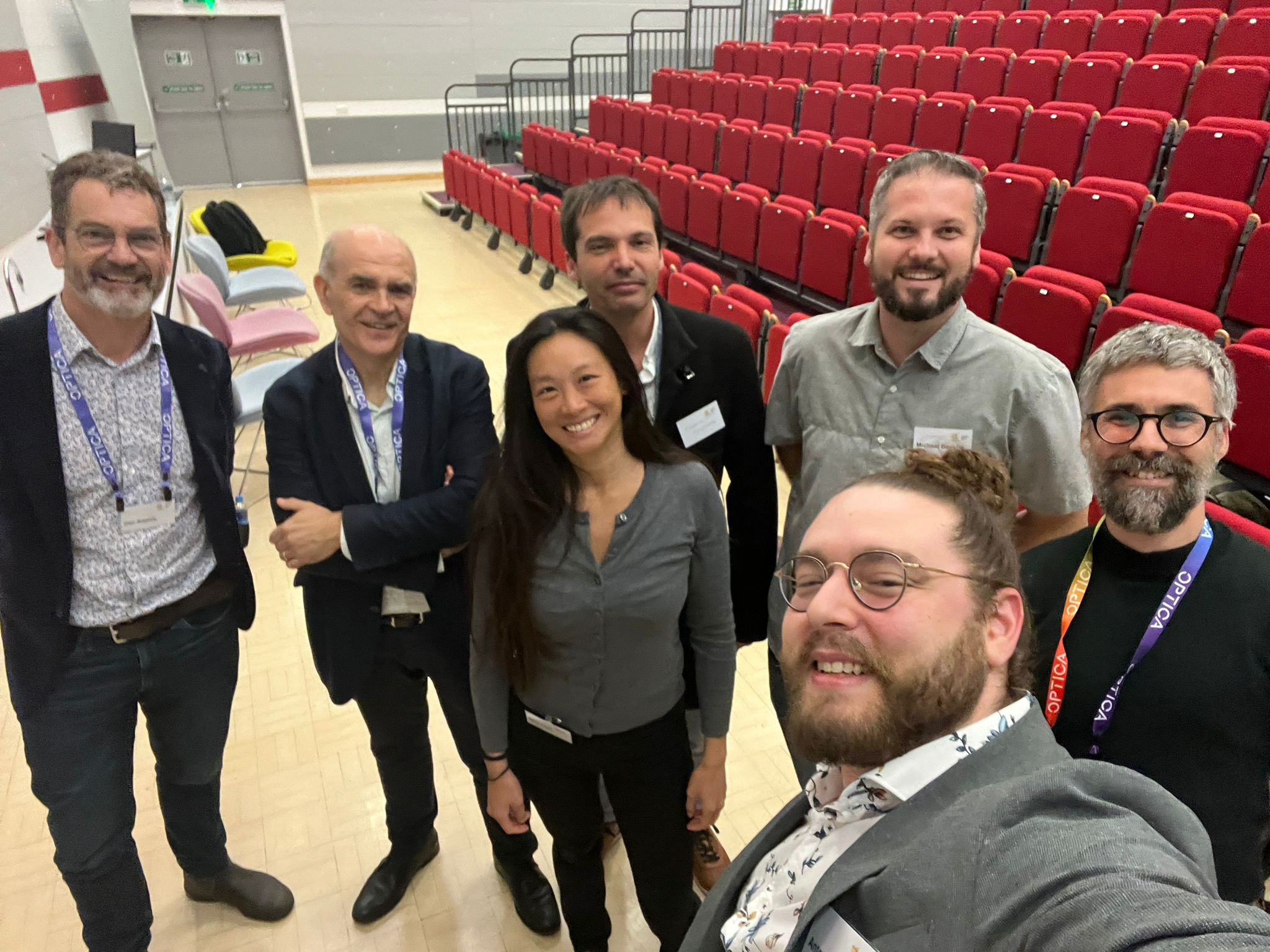
Selfie of seven researchers wearing conference name badges, standing in front of rows of red auditorium seats. From left to right, back to front: Dan Adams, Eduardo Fernandez, Xing Chen, Frederik Ceyssens, Michael Beyeler, Jan Antolik, and Antonio Lozano.

At the Fall Vision Meeting with Dan Adams, Eduardo Fernandez, Xing Chen, Frederik Ceyssens, Antonio Lozano, and Jan Antolik.

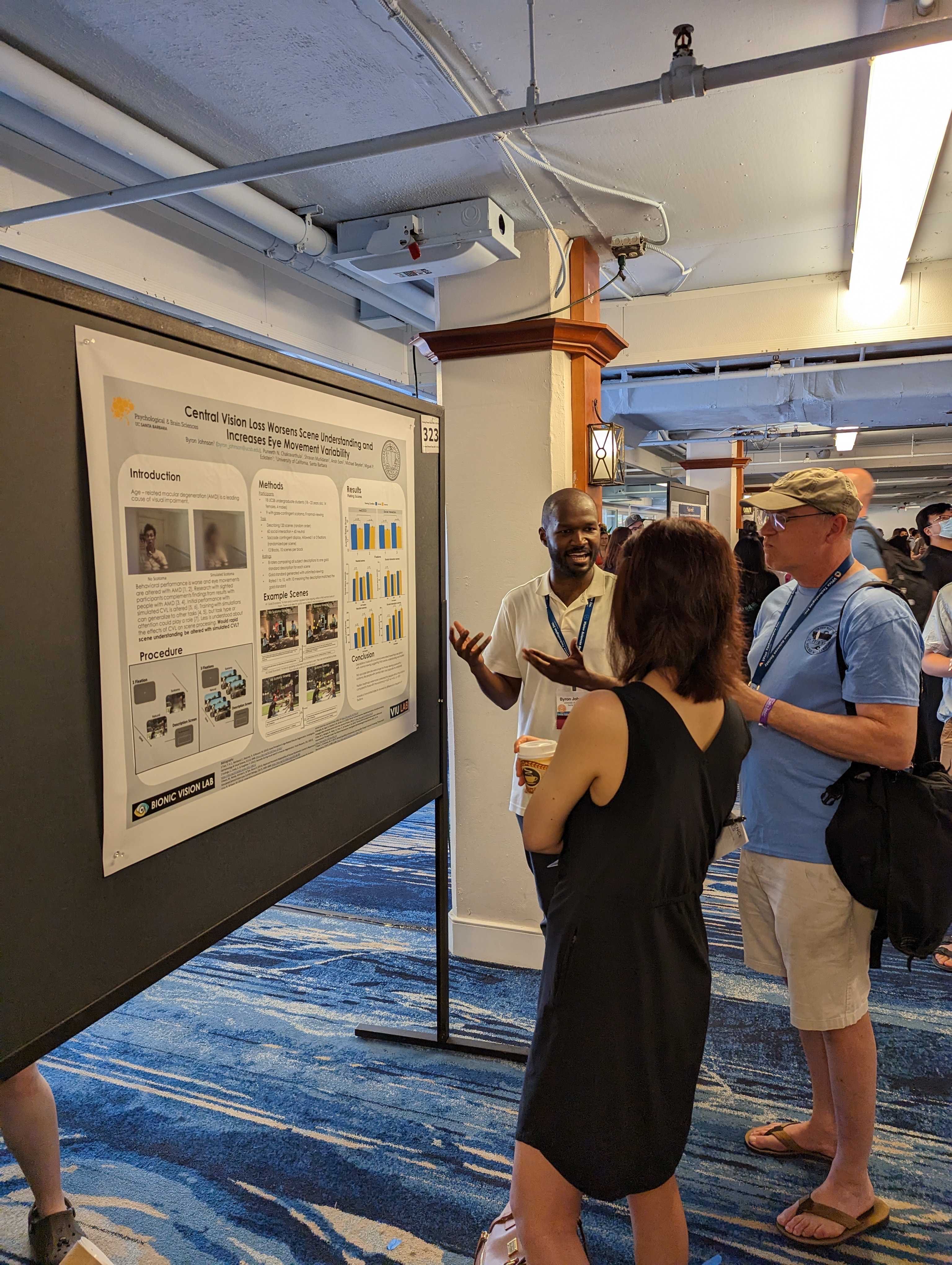
Byron Johnson gestures while explaining a poster titled “Central Vision Loss Worsens Scene Understanding and Increases Eye Movement Variability” to Geoff Boynton and another attendee in the Banyan Breezeway at VSS.

Byron Johnson presenting at VSS.

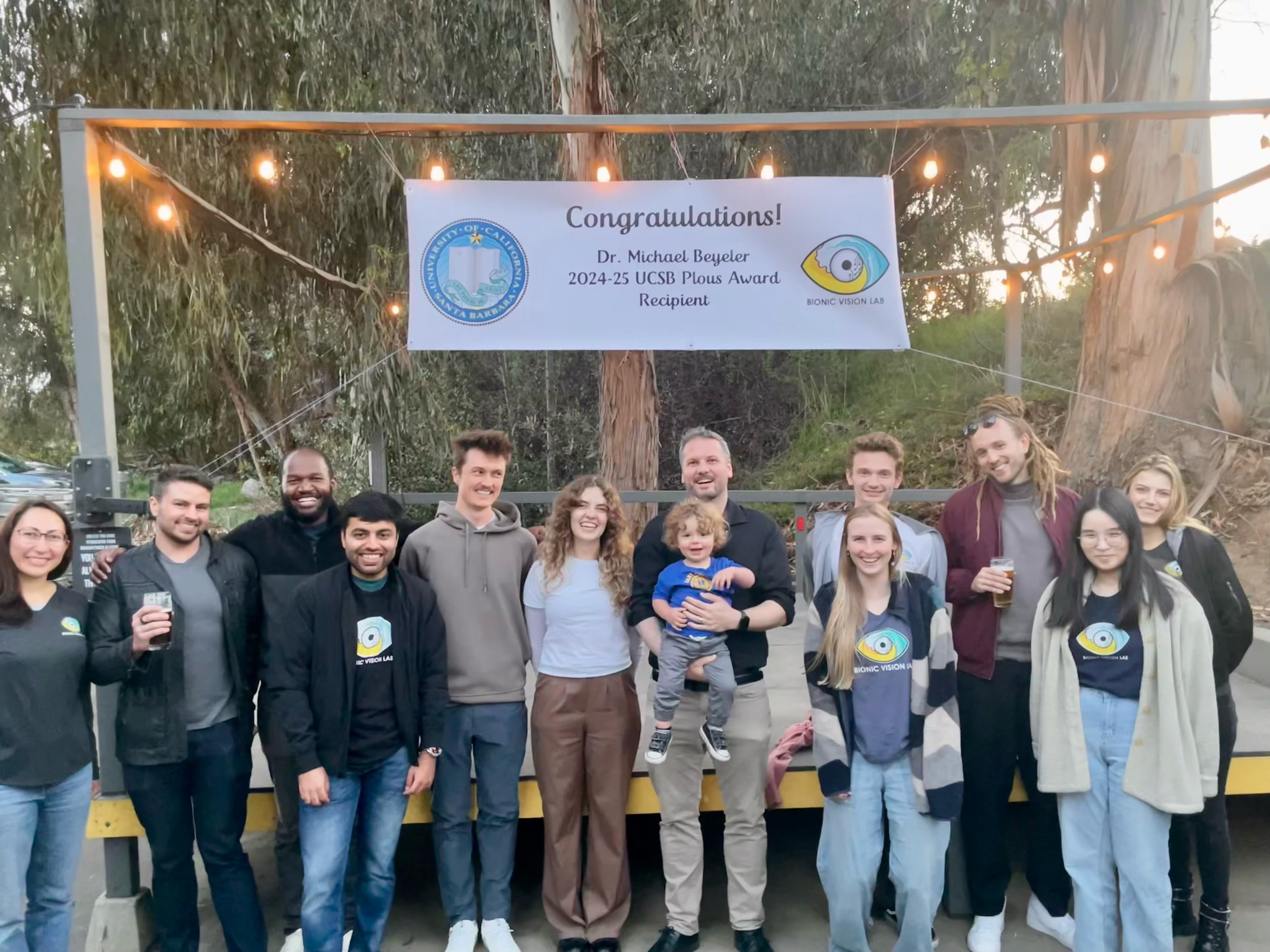
About a dozen lab members, several in Bionic Vision Lab T-shirts, pose under string lights and a banner reading “Congratulations! Dr. Michael Beyeler, 2024-25 UCSB Plous Award Recipient.” From left to right: Roksana Sadeghi, Justin Kasowski, Byron Johnson, Apurv Varshney, Galen Pogoncheff, Lily Turkstra, Prof. Beyeler with Julian, Emily Joyce, Jacob Granley, Marius Schneider, Yuchen Hou, and Hannah Stone.

The Bionic Vision Lab celebrating Prof. Beyeler's Plous Award.

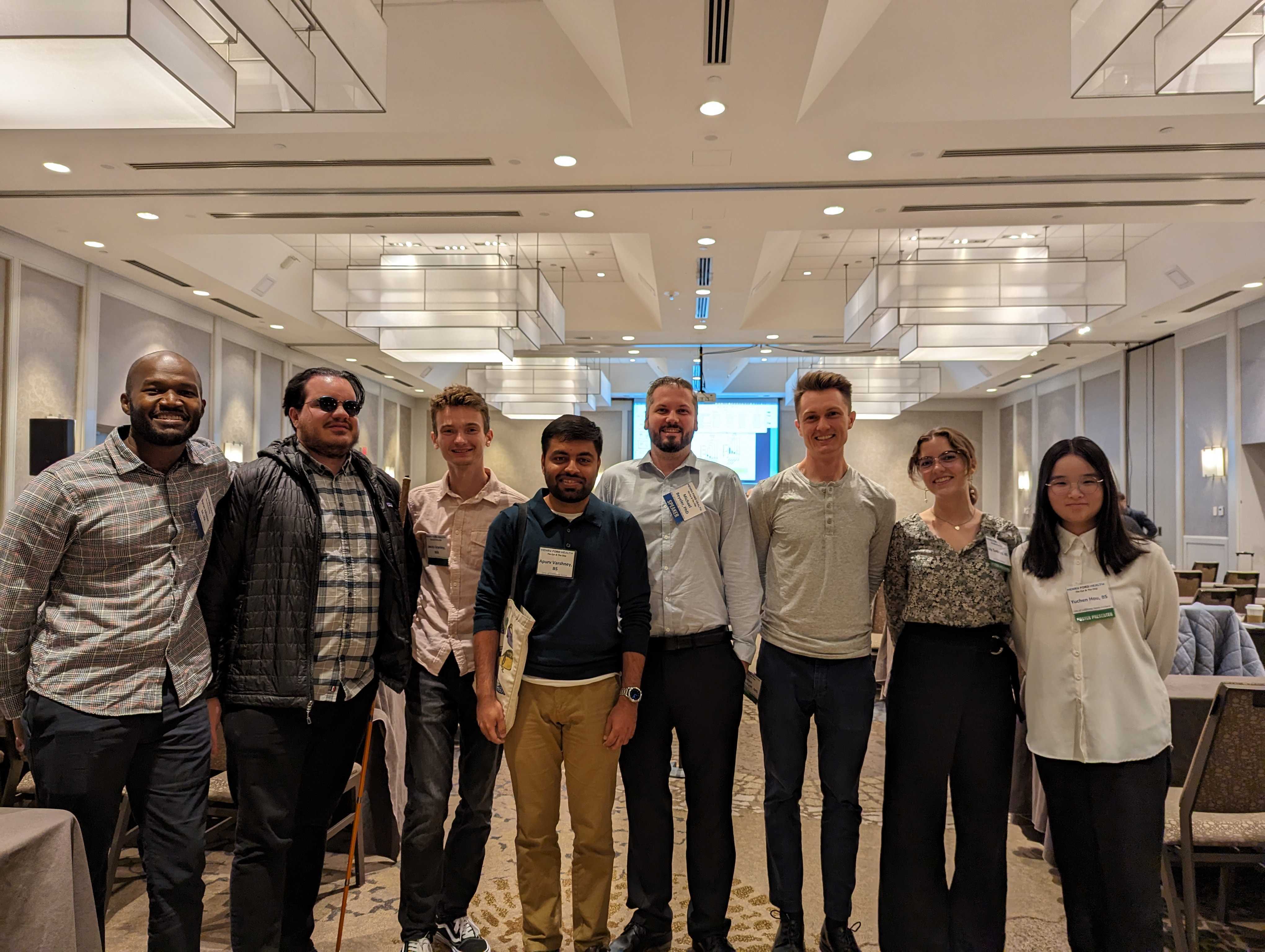
Eight lab members with conference name badges stand together in a hotel ballroom at The Eye and the Chip World Congress on Artificial Vision. From left to right: Byron Johnson, Lucas Nadolskis, Jacob Granley, Apurv Varshney, Prof. Beyeler, Galen Pogoncheff, Lily Turkstra, and Yuchen Hou.

The Bionic Vision Lab at The Eye and The Chip 2023.

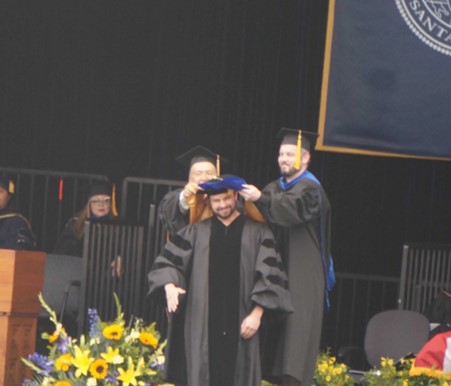
On the commencement stage, Profs. El Abbadi and Beyeler in academic regalia place a doctoral hood over Justin Kasowski’s shoulders, the first graduate from the Bionic Vision Lab (2023).

Dr. Justin Kasowski getting hooded at the 2023 Commencement Ceremony.

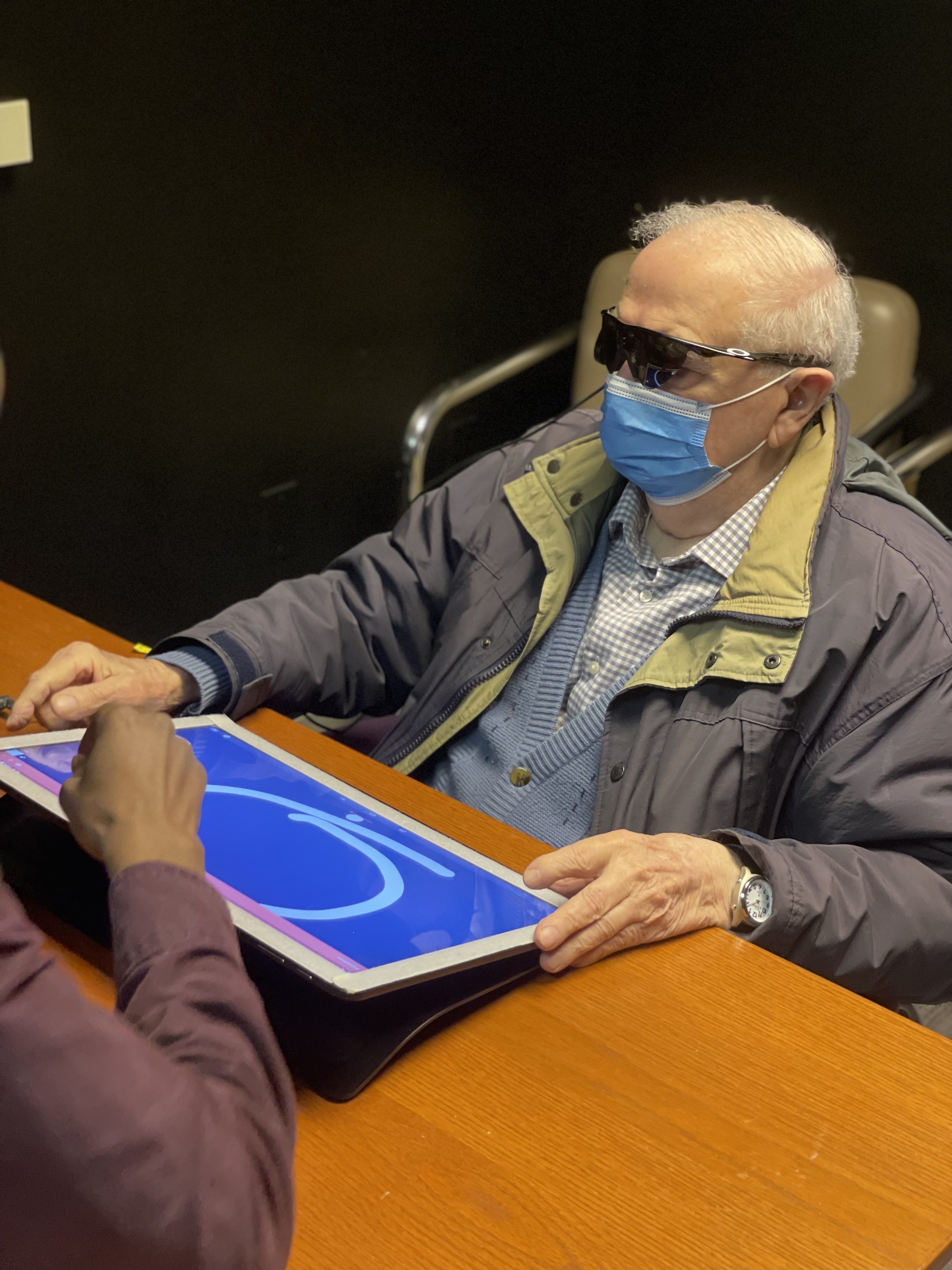
An Argus II user wearing the system’s camera glasses and a face mask sits at a table with a touchscreen showing a traced curved line; researcher Byron Johnson sits across the table.

Argus II user drawing a perceived phosphene on a touchscreen.

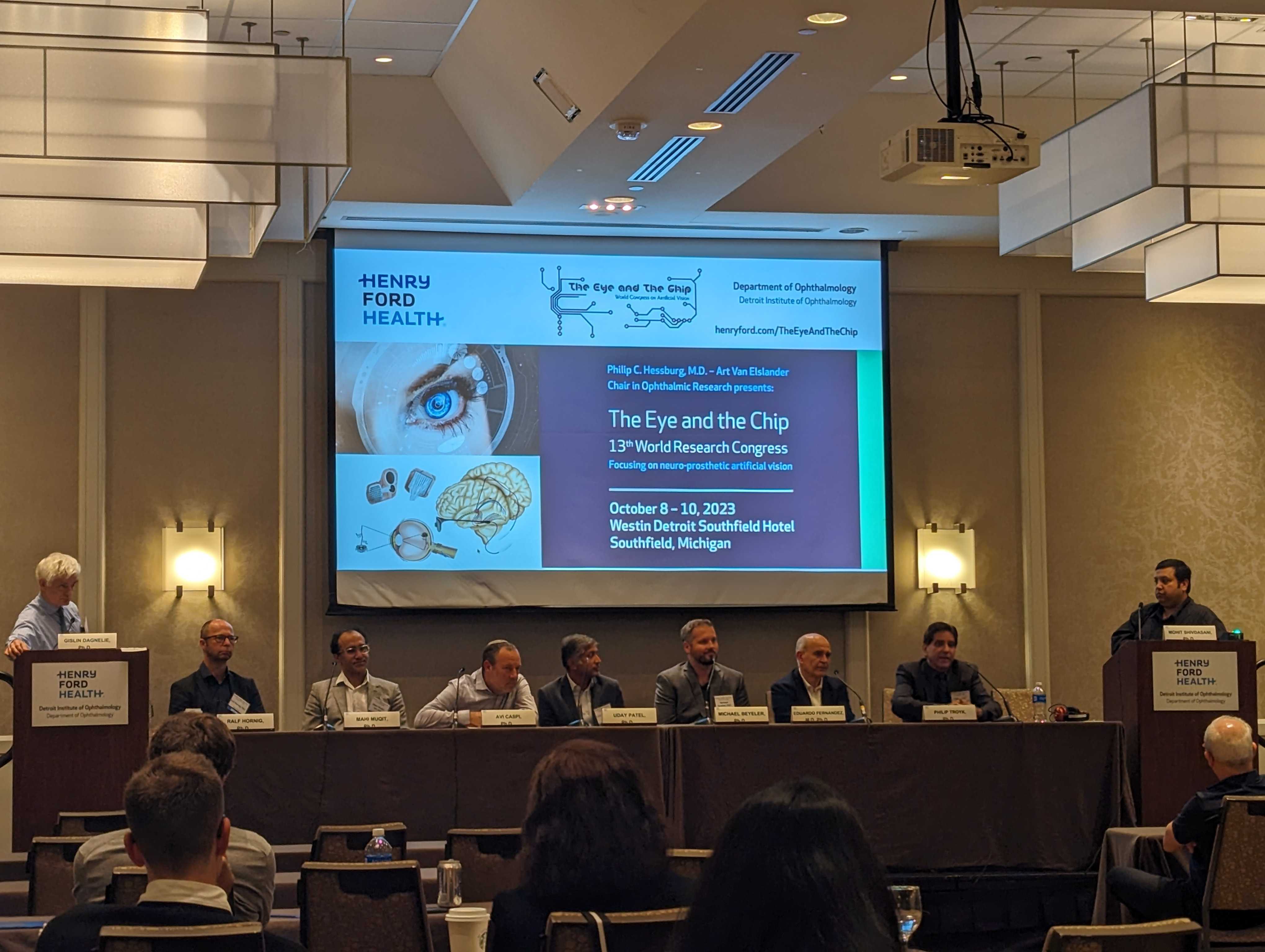
Seven panelists sit at a long table between two moderators at podiums, beneath a projected slide for The Eye and the Chip 13th World Research Congress. From left to right: Gislin Dagnelie at the podium, Ralf Hornig, Mahi Muqit, Avi Caspi, Uday Patel, Michael Beyeler, Eduardo Fernandez, Phil Troyk, and Mohit Shivdasani at the other podium.

Prof. Beyeler on a panel with prosthesis experts at The Eye and The Chip 2023.

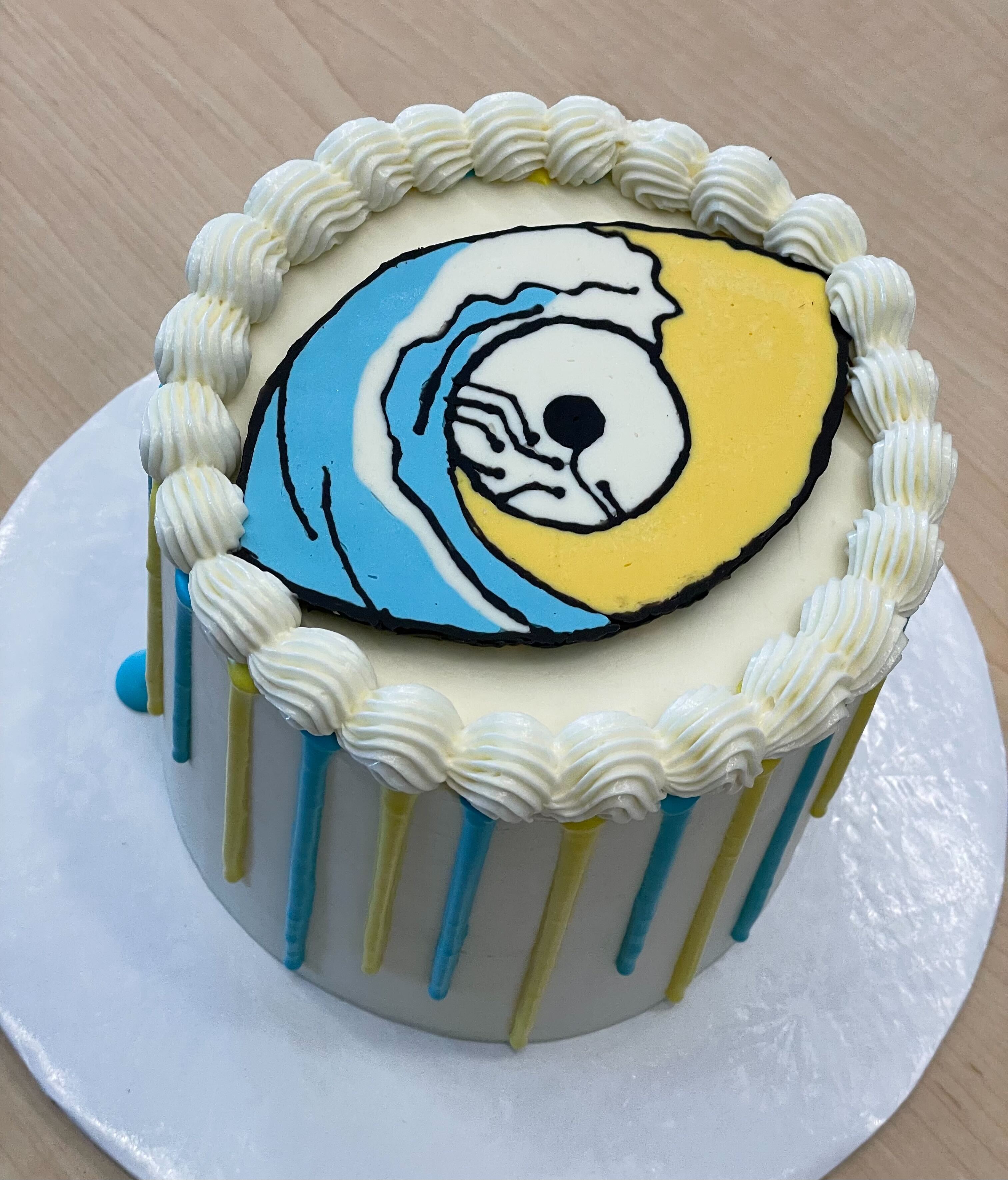
Round white cake decorated with the Bionic Vision Lab logo, an eye formed by a curling blue wave with a circuit-board pupil, with blue and yellow icing drips down the sides.

Bionic Vision Lab cake designed by Tori LeVier.

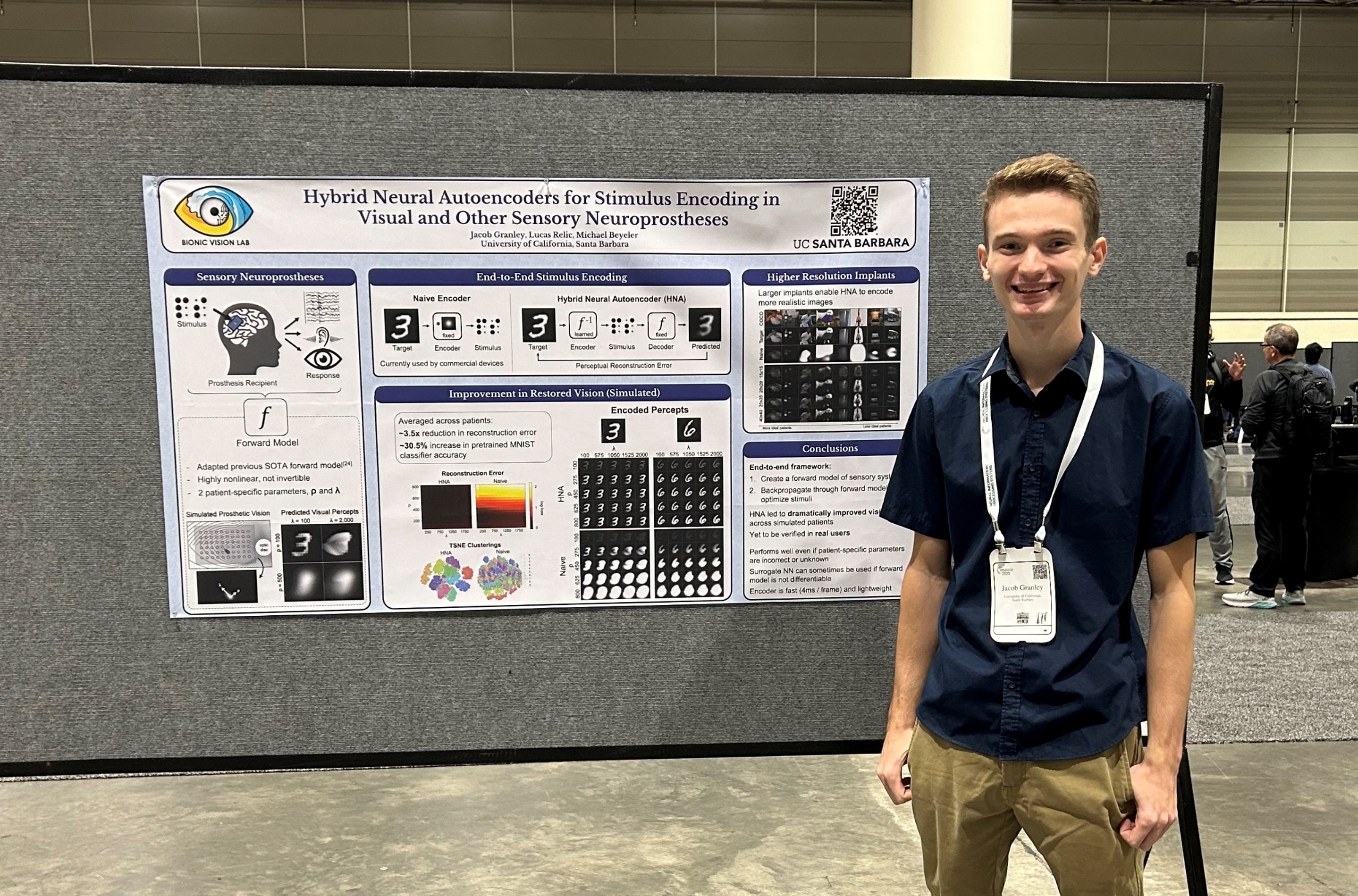
Jacob Granley smiles beside a poster titled “Hybrid Neural Autoencoders for Stimulus Encoding in Visual and Other Sensory Neuroprostheses” in the NeurIPS 2022 poster hall.

Jacob Granley presenting at NeurIPS 2022.

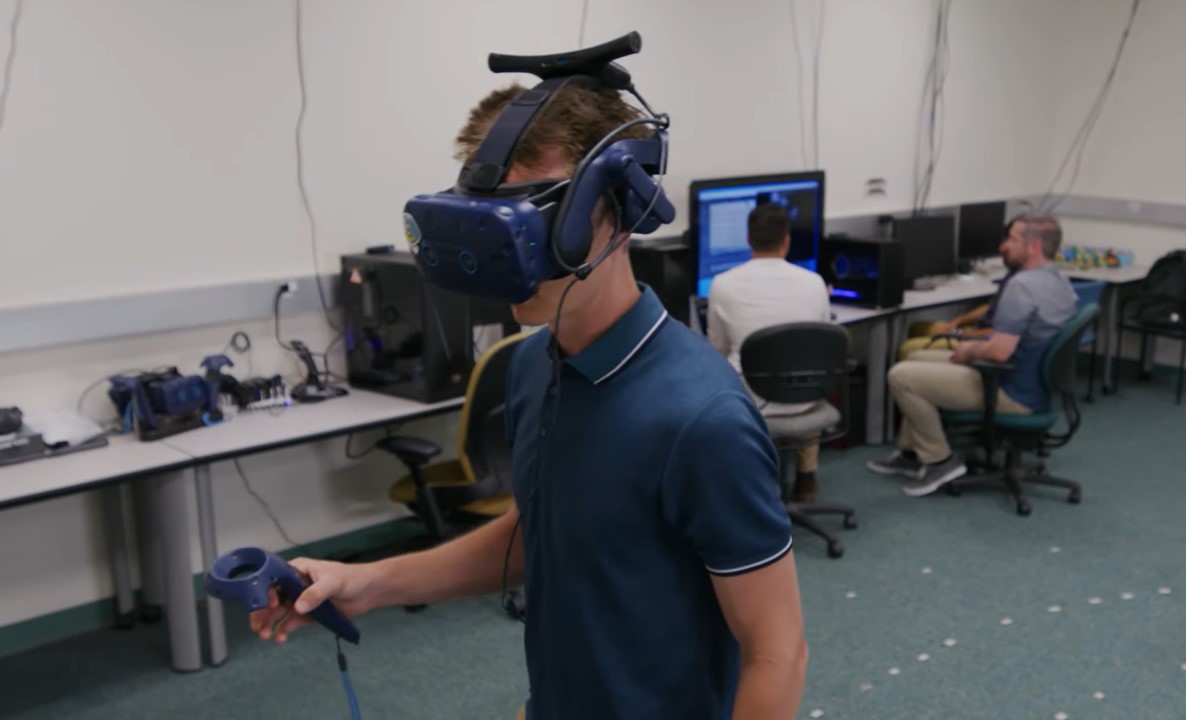
Galen Pogoncheff wears a virtual reality headset and holds a hand controller in the lab while colleagues work at computers in the background.

Galen Pogoncheff using the BionicVisionXR simulator.

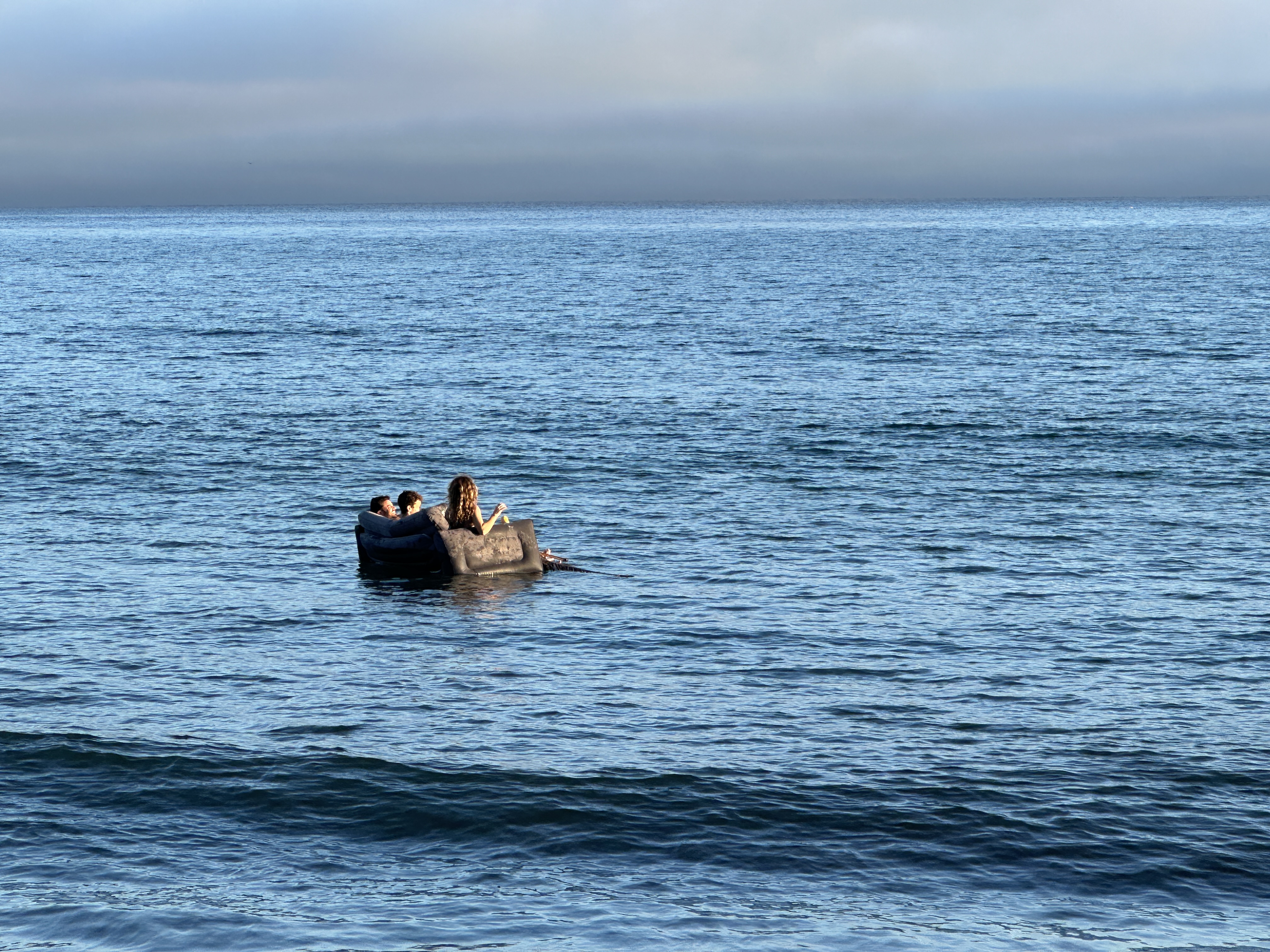
Three people float on a sofa in calm ocean water under an overcast evening sky.

Students drifting off into the sunset after a hard day's work.

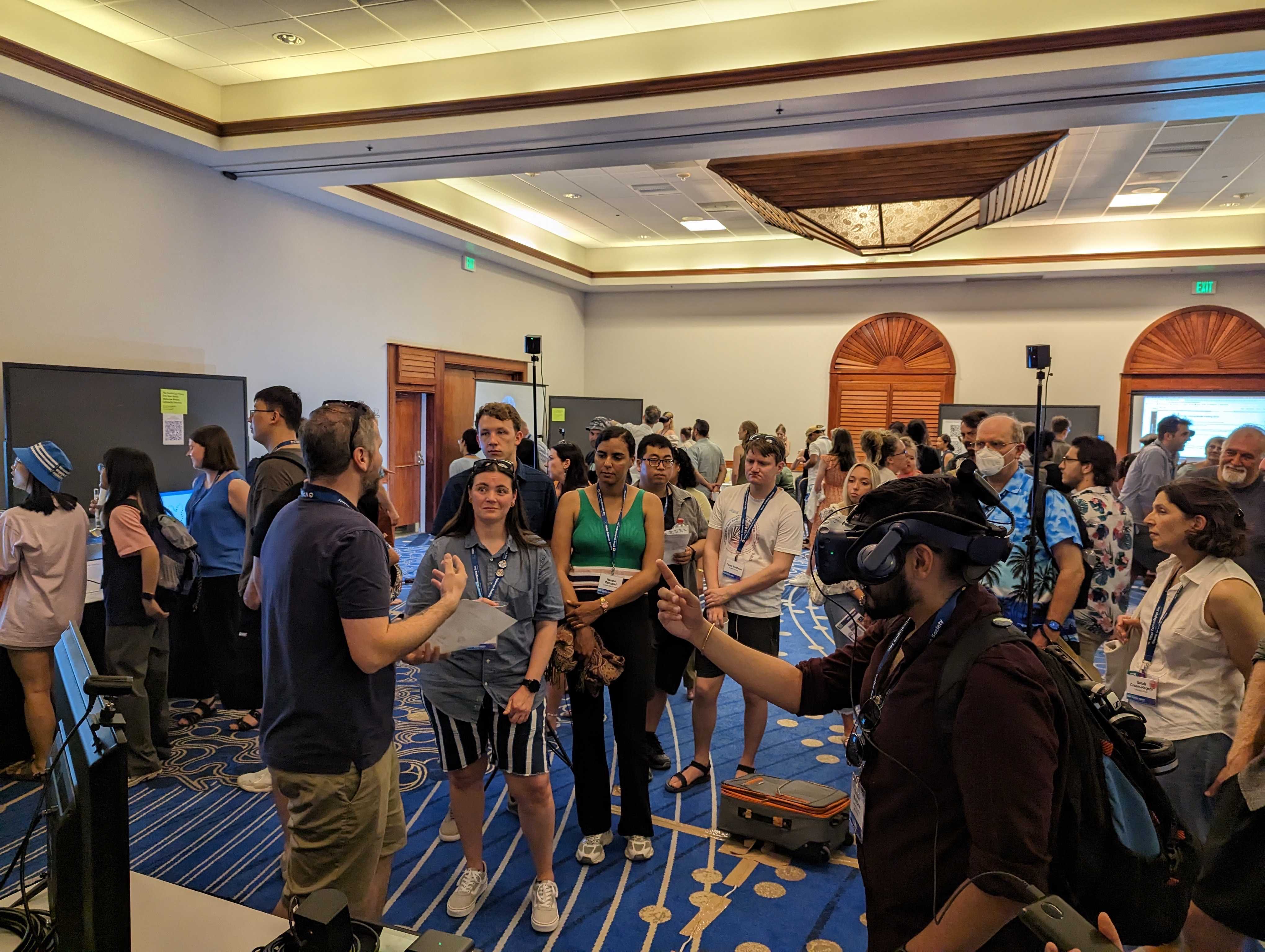
In a crowded conference room, Prof. Beyeler, seen from behind, talks with a group of attendees while a participant wearing a virtual reality headset points into the air.

Prof. Beyeler demoing BionicVisionXR at VSS 2023.

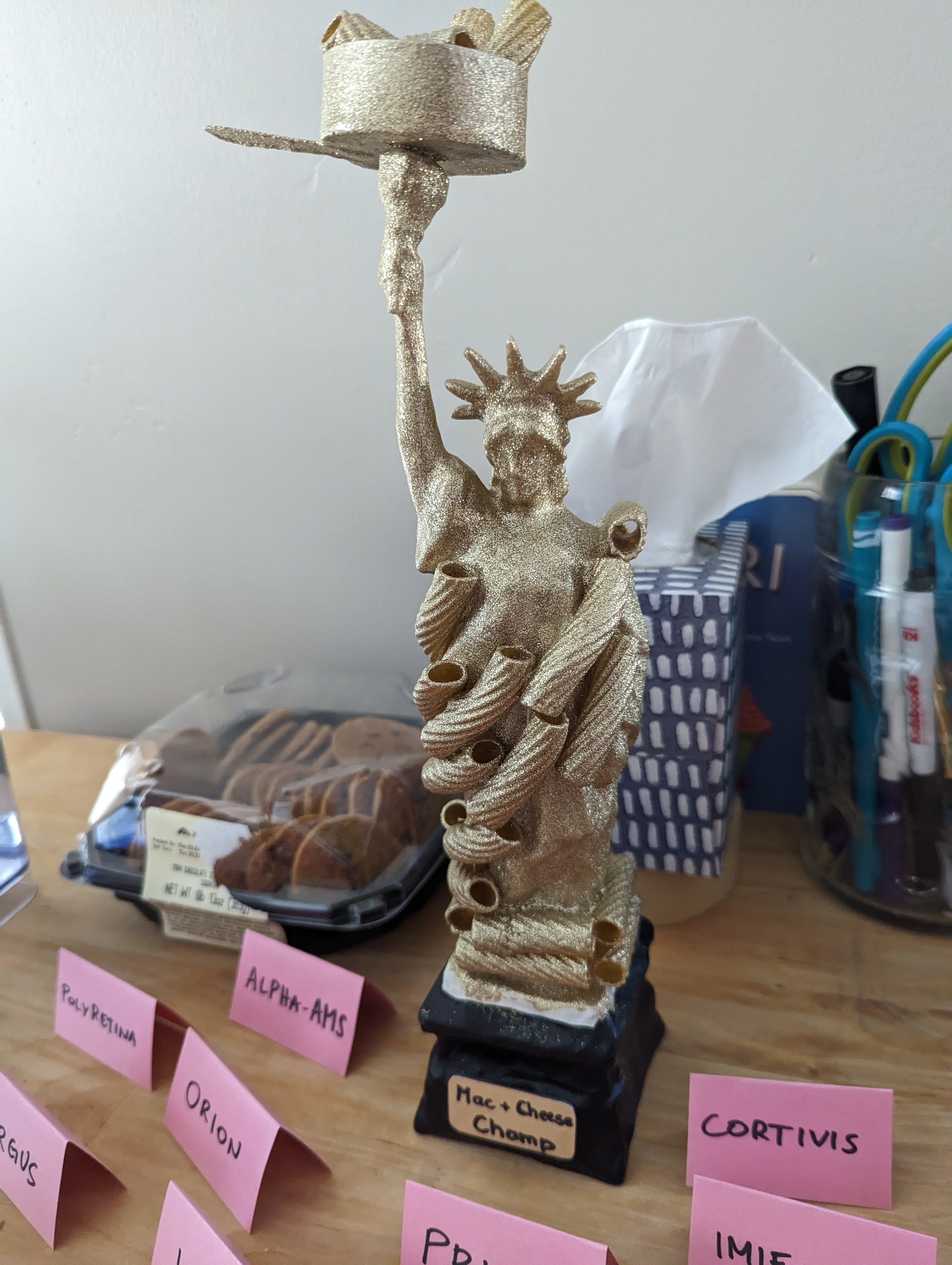
Gold-glitter Statue of Liberty figurine covered in macaroni, holding up a saucepan instead of a torch, on a base labeled “Mac + Cheese Champ.” Tent cards around it standing for the anonymous competition entries are named after visual prostheses: PolyRetina, Alpha-AMS, Orion, Argus, and Cortivis.

Mac and cheese trophy for first-place winner Lily Turkstra at the lab's first mac and cheese cook-off.

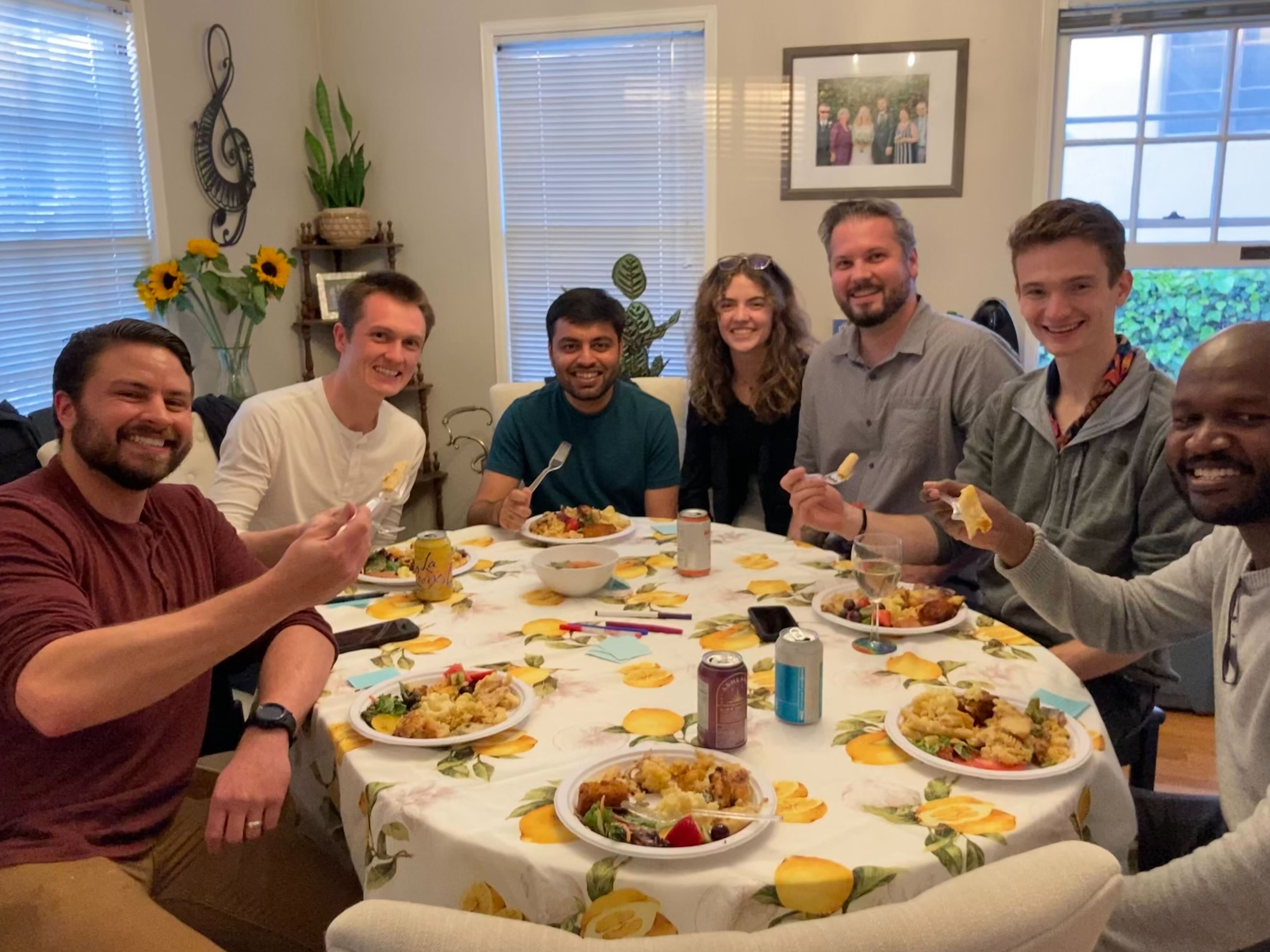
Seven lab members smile around a round dining table with a lemon-print tablecloth and plates of mac and cheese, several raising forks (ca. 2022). From left to right: Justin Kasowski, Galen Pogoncheff, Apurv Varshney, Lily Turkstra, Prof. Beyeler, Jacob Granley, and Byron Johnson.

The Bionic Vision Lab at the mac and cheese cook-off.

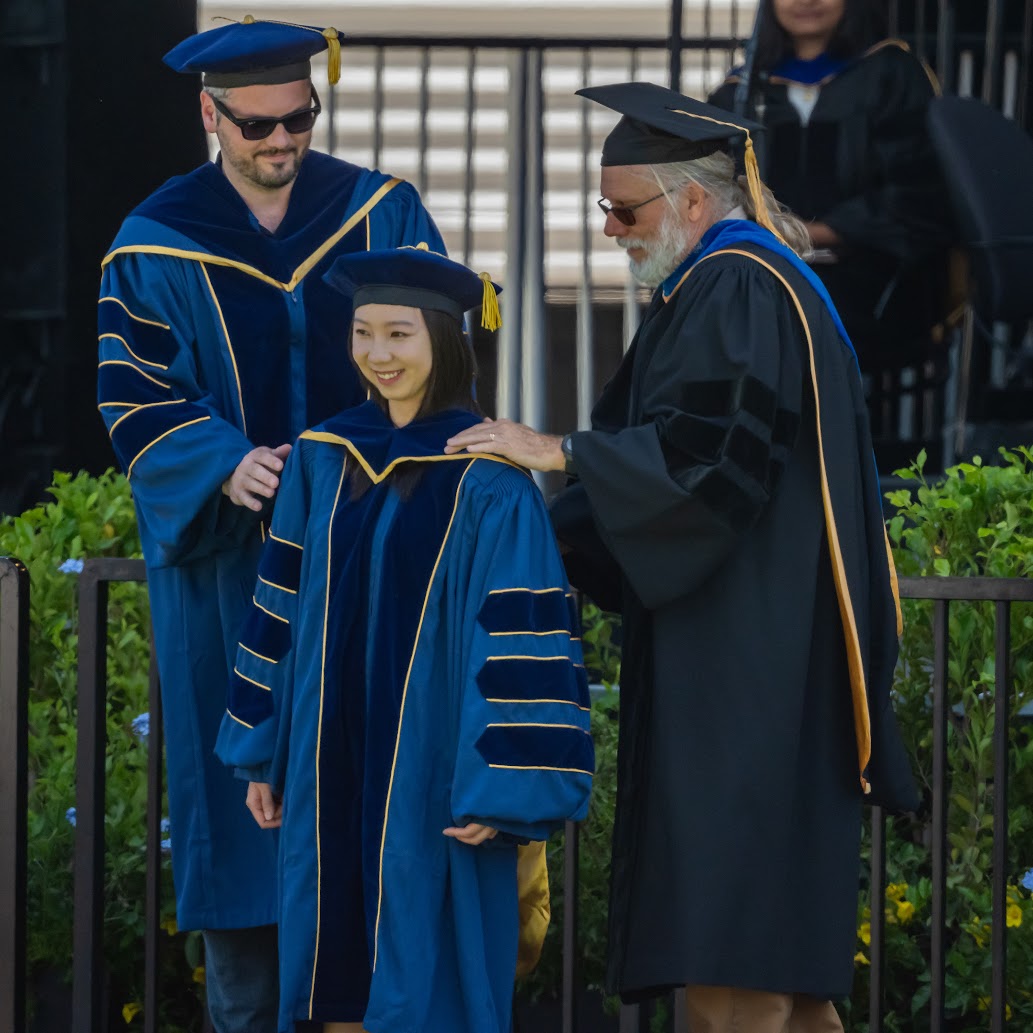
Aiwen Xu, in blue doctoral robes, smiles as two faculty members place the doctoral hood.

Dr. Aiwen Xu getting hooded at the 2024 Commencement Ceremony.