We study how stimulation of the retina, LGN, and visual cortex produces artificial vision, and which biological details matter most for predicting the resulting percepts.
Topic
Computational Neuroscience
Researchers Interested in This Topic
-
 Michael Beyeler
Associate Professor
, CS / PBS
Michael Beyeler
Associate Professor
, CS / PBS
-
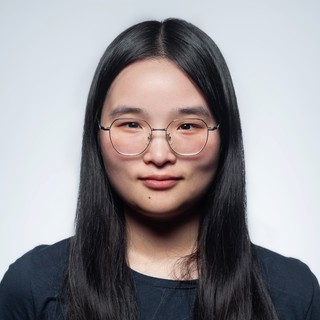 Yuchen Hou
PhD Candidate
, CS
Yuchen Hou
PhD Candidate
, CS
-
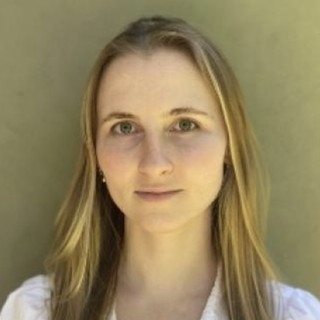 Emily M. Joyce
PhD Student
, DYNS
Emily M. Joyce
PhD Student
, DYNS
-
 Lucas Nadolskis
PhD Student
, DYNS
Lucas Nadolskis
PhD Student
, DYNS
-
 Galen Pogoncheff
PhD Candidate
, CS
Galen Pogoncheff
PhD Candidate
, CS
-
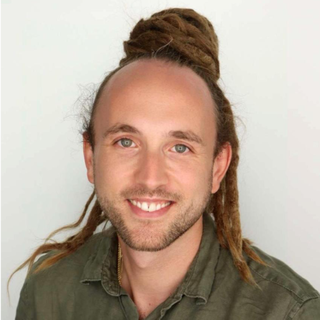 Marius Schneider
Postdoctoral Scholar
, CS
Marius Schneider
Postdoctoral Scholar
, CS
-
 Eirini Schoinas
Research Assistant
, CCS
Eirini Schoinas
Research Assistant
, CCS
-
 Hannah L. Stone
PhD Student
, PBS
Hannah L. Stone
PhD Student
, PBS
-
 Nora Thomas
Lab Manager
, PBS
Nora Thomas
Lab Manager
, PBS
Research Areas


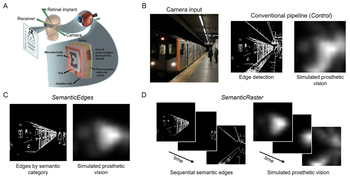
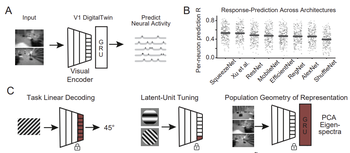
NeuroAI & Visual Representations
We compare representations in biological and artificial visual systems to understand what makes them similar, where they differ, and which biological constraints matter for learning and behavior.
 Lucas Nadolskis
 Galen Pogoncheff
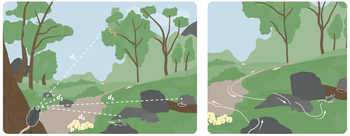
Active Vision & Sensorimotor Intelligence
We study vision during natural behavior: how eye, head, and body movements shape the visual input, how the brain responds, and how biological and artificial systems solve similar sensorimotor problems.


Software
pulse2percept: A Python-Based Simulation Framework for Bionic Vision
pulse2percept is an open-source Python framework for modeling how retinal and cortical visual prostheses produce percepts.