Vision loss and restored sight both require people to adapt. Central and peripheral field loss, progressive degeneration, and prosthetic vision affect perception in different ways, but they raise similar questions: what information remains useful, what can be learned with experience, and which strategies can improve performance?
What We Study
We combine psychophysics, immersive VR, and studies with blind and low-vision participants to understand what people can do with limited or altered vision. Simulations in sighted observers let us manipulate specific forms of vision loss under controlled conditions, while studies with people who have low vision or use visual prostheses provide a direct test of how well those simulations capture real-world function.
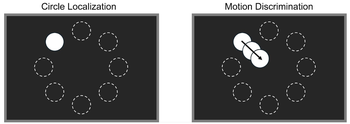
We also study how vision should be assessed. Acuity alone misses many of the challenges people face in everyday tasks, and performance can also depend on attention, fatigue, engagement, and cognitive load. Our goal is to develop training methods and outcome measures that better reflect how people actually use vision outside the lab.
Current Directions
- Perceptual learning and plasticity. How experience and training change performance with degraded or prosthetic vision.
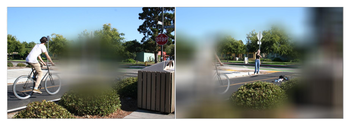
- Central and peripheral vision loss. How different patterns of field loss affect scene understanding and visually guided behavior.
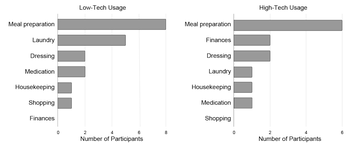
- Everyday visual function. Identifying the information people who are blind or have low vision need for common tasks.
- Training and rehabilitation. Developing and evaluating gamified, adaptive, and at-home approaches to visual training.
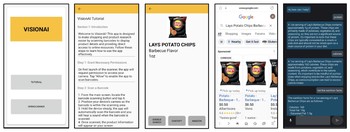
- Outcome measures and long-term use. Measuring functional benefit, usability, and adaptation to prostheses and low-vision aids over time.