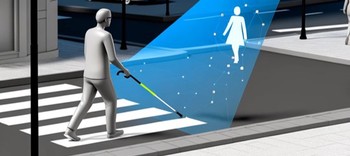
Rather than pursuing a (degraded) imitation of natural sight, bionic vision might be better understood as a form of neuroadaptive XR: a perceptual interface that forgoes visual fidelity in favor of delivering sparse, personalized cues shaped (at its full potential) by user intent, behavioral context, and cognitive state.
Topic: Immersive Technology (VR/AR/MR)
Researchers Interested in This Topic

Michael Beyeler
Associate Professor

CE
Christian Grunt
Research Assistant

CS
Diego Linn
Research Assistant

CS
Jack T. Liu
Research Assistant

CS
William Ou
Research Assistant

PBS
Lily M. Turkstra
PhD Candidate

CS
Apurv Varshney
PhD Student
Research Projects
Bionic vision as neuroadaptive XR: Closed-loop perceptual interfaces for neurotechnology
Michael Beyeler 2025 IEEE International Symposium on Mixed and Augmented Reality Adjunct (ISMAR-Adjunct)
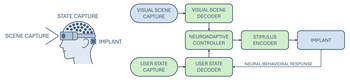
BionicVisionXR: An Open-Source Virtual Reality Toolbox for Bionic Vision
BionicVisionXR is an open-source virtual reality toolbox for simulated prosthetic vision that uses a psychophysically validated computational model to allow sighted participants to “see through the eyes” of a bionic eye recipient.
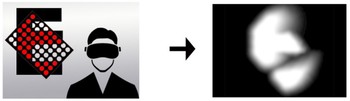
SimpleXR: An open-source Unity toolbox for simplified XR development
SimpleXR is a Unity package designed to facilitate rapid development of visual and behavioral experiments using virtual and augmented reality.

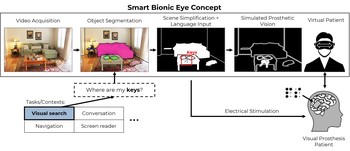
Towards a Smart Bionic Eye
Rather than aiming to one day restore natural vision, we might be better off thinking about how to create practical and useful artificial vision now.
Assistive Technologies for People Who Are Blind
This research explores the integration of computer vision into various assistive devices, aiming to enhance urban navigation and environmental interaction for individuals who are blind or visually impaired.