Deep learning helps bionic eyes communicate with the brain
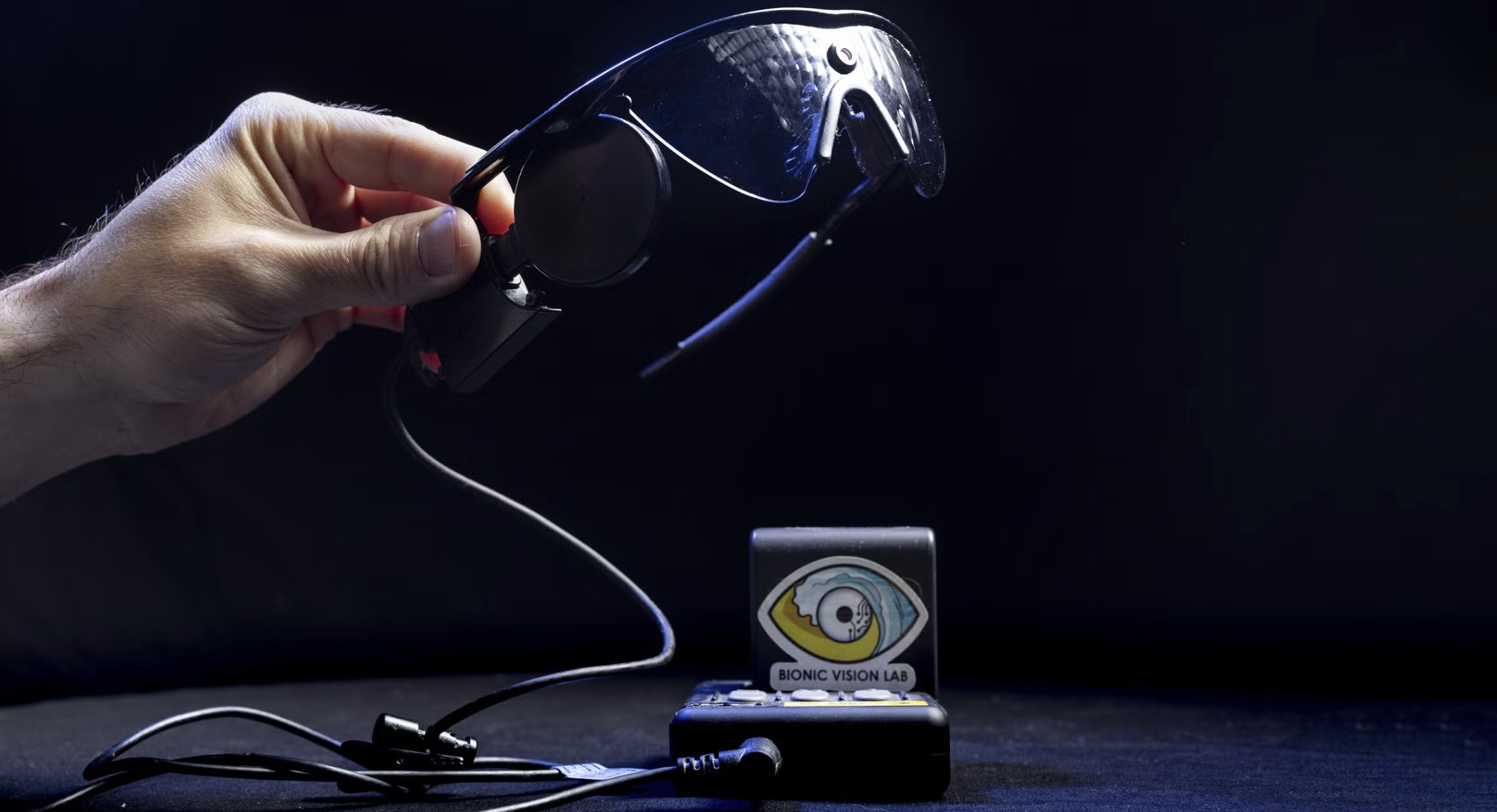
Our new Neuron paper demonstrates a data-driven approach for controlling neural activity in a human visual cortical prosthesis, moving toward implants that adapt to the brain rather than relying on fixed stimulation recipes.
Visual prostheses typically treat electrical stimulation as the input and perception as the output. But the brain is not a simple collection of pixels: electrodes interact, neural responses vary over time, and the same stimulation can produce different patterns of activity.
In this study, researchers from UC Santa Barbara, ETH Zurich, and Miguel Hernández University used a bidirectional 96-channel cortical implant in a blind participant to record how the visual cortex responded to electrical stimulation. Deep-learning models trained on these recordings could then generate stimulation patterns that drove neural activity toward desired targets, often using less electrical current than conventional approaches.
One result was particularly important: the neural activity actually evoked in the brain predicted the participant’s reported visual percepts substantially better than the stimulation parameters alone. This suggests a different framework for designing future bionic eyes: stimulation → neural response → perception, with the implant learning how an individual brain responds and adapting accordingly.
The work, led by co-first authors Pehuén Moure, Jacob Granley, and Fabrizio Grani, was published in Neuron and has since been featured by UC Santa Barbara’s The Current, Medical Xpress, Open Access Government, and Technology.org.
The study is part of our broader effort to develop model-driven visual prostheses that produce more predictable and useful artificial vision.

Associate Professor
Michael Beyeler is an Associate Professor at UC Santa Barbara and Director of the Bionic Vision Lab. He studies how biological and artificial visual systems represent the world, and how those representations can be understood and engineered to restore useful vision.